
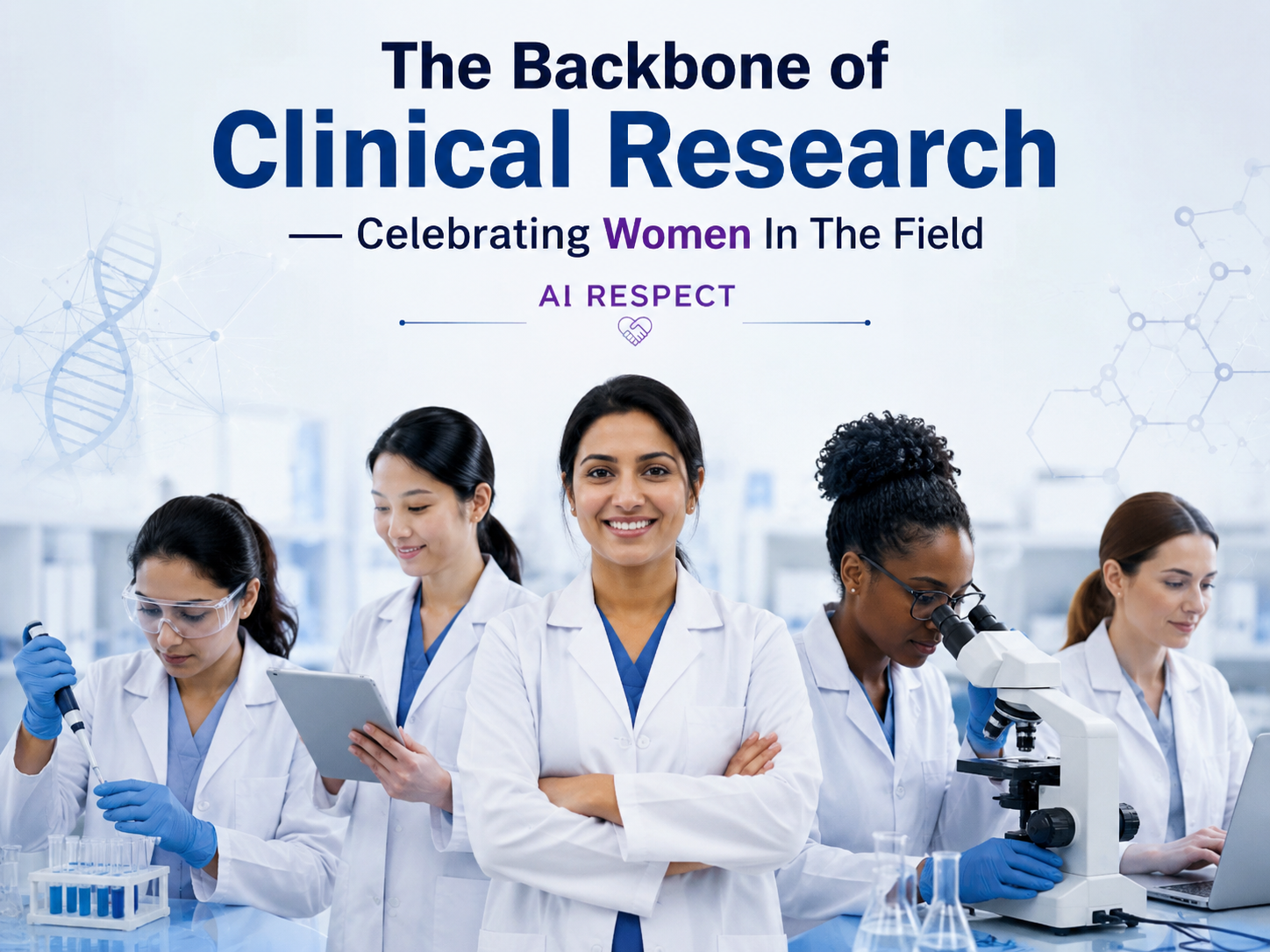
After more than 16 years in clinical research, there is something I have observed consistently across sites, sponsors, CROs, and study teams:
Women carry an extraordinary amount of the operational, organizational, and human responsibility that keeps clinical trials moving forward every single day.
Not occasionally. Not in isolated roles. But across nearly every level of the industry.
Who I Am Talking About
The Clinical Research Coordinator staying late to complete a patient visit because a participant traveled hours to be there and deserves to be seen properly.
The CRA catching a critical issue during a monitoring visit while simultaneously helping a struggling site regain operational control.
The in-house CRA managing multiple studies, timelines, queries, and communication streams without letting details fall through the cracks.
The Clinical Trial Lead balancing sponsor expectations, enrollment pressure, protocol amendments, and site performance all at once.
The Project Manager coordinating teams across countries, departments, vendors, and time zones to keep a study operationally stable.
These roles may look different on paper. But they all require the same thing: consistent responsibility carried quietly, professionally, and often without recognition.
The Work That Often Goes Unnoticed
One thing I have learned throughout my career is that many of the moments that truly keep trials functioning never appear in study reports or presentations.
The CRC who notices a participant seems confused about their medication instructions and takes extra time to clarify everything carefully — preventing a deviation no one will ever know almost happened.
The CRA who recognizes a site is overwhelmed and spends additional time helping them reorganize processes before small issues become serious findings.
The CTL reviewing protocol amendments late into the evening to ensure sites receive clear guidance before implementation deadlines.
These moments are rarely visible externally.
But they directly affect patient safety, protocol compliance, site performance, retention, data integrity, and overall study continuity.
And much of this work is carried by women throughout the industry every single day.
Communication Is One Of The Most Underrated Clinical Skills
In clinical research, communication is not a “soft skill.” It is an operational skill.
A misunderstood instruction can become a protocol deviation. An unanswered concern can affect patient retention. A poorly managed conversation can create site frustration, delayed reporting, or unnecessary escalation.
Many of the exceptional women I have worked alongside throughout my career shared one consistent strength:
They knew how to communicate clearly while still making people feel respected, supported, and heard.
With patients. With site staff. With sponsors. With investigators. With overwhelmed study teams trying to manage impossible timelines.
That ability stabilizes trials more often than people realize.
The Human Side Of Clinical Research
Clinical research is often discussed in terms of data, enrollment, metrics, timelines, endpoints, and deliverables.
But behind all of those things are people doing emotionally demanding work under constant pressure.
Sitting with anxious patients. Managing difficult conversations. Balancing compliance expectations with operational realities. Trying to protect both patient experience and data integrity at the same time.
That work requires intelligence, adaptability, resilience, and emotional discipline.
And many women in this industry carry those responsibilities with remarkable consistency.
To Every Woman Working In Clinical Research
Whether you work at a research site, in the field, remotely, in project management, in regulatory operations, in trial management, in data management, or behind the scenes supporting study execution — your work matters more than you may realize.
Your attention to detail protects patients. Your communication keeps studies functioning. Your organization prevents operational breakdowns. Your persistence keeps difficult trials moving forward.
And many of the contributions that matter most will never appear publicly attached to your name.
But they matter anyway.
Clinical research depends on people willing to carry responsibility carefully, consistently, and professionally — even when nobody is watching.
And this industry is filled with extraordinary women doing exactly that every day.
Why I Created Syncreon Research Lounge
Part of the reason I created Syncreon Research Lounge was because I wanted a space where the real work of clinical research could be acknowledged honestly.
Not only the science. Not only the outcomes. Not only the metrics.
But the people behind the work.
The professionals who stay late, solve problems quietly, support patients compassionately, manage operational chaos professionally, and continue showing up every day because they believe the work matters.
This industry deserves spaces where those contributions are recognized.
SRL was built to be one of them.
Asma Siddiqui, CCRA is the founder of Syncreon Research Lounge — Where Clinical Research Comes to Talk.
SRL was created for clinical research professionals who believe the industry deserves deeper conversations, stronger operational thinking, and real-world perspective beyond training slides and SOPs.